
GameFrosting collection
Props
Game-inspired objects made to hold, wear, and display.
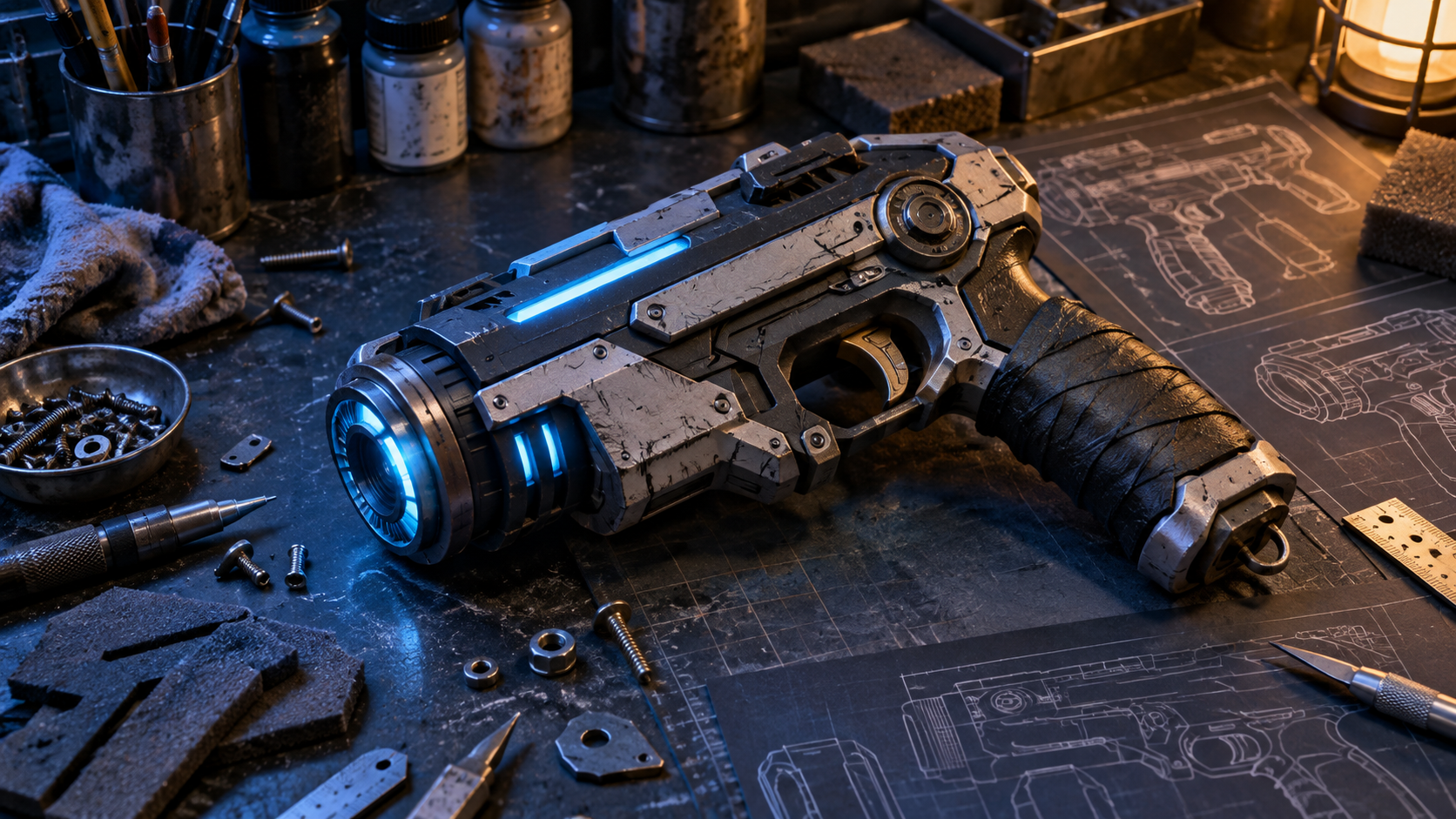
New guides
- GuideDisplay a Big Daddy Inspired Prop Safely
Large game-inspired props need a display plan that protects the piece and everyone walking past it. - GuideBest Paints for 3D Printed Props
A good paint system begins with surface preparation and ends with a finish that matches how the prop will be handled. - GuideMake a Game Prop Weathering Test Board
A test board lets you control weathering instead of discovering too late that the final prop became too dark or too busy. - GuideChoose Magnets for Game Props
Magnets are most useful when they make a repair, storage, or interchangeable detail easier without weakening the surrounding material. - GuideMake a Game Prop Weatherproof Finish
Test finishes on the actual materials first because protection, flexibility, and color response vary from surface to surface. - GuideBuild a Game Prop Display Crate
A crate can serve as both transport and display when it protects the object without hiding its strongest visual features. - GuideMake Game Prop Surface Texture
Texture adds scale and realism when it appears where a material would actually wear, grip, or collect detail. - GuideBuild a Game Prop Light Diffuser
Diffusion should soften bright points while preserving the shape and color that make the prop recognizable. - GuideMake a Game Prop Hinged Panel
A small access panel feels professional when the seam is intentional and the hinge remains useful after painting. - GuideBest Tools for Making Game Props
A small set of reliable tools can handle most prop work when each tool has a clear job and safe workspace. - GuideMake a Gran Turismo Racing Prop
Choose one visual feature such as a steering wheel, badge, or livery panel and build the project around a clean, recognizable form. - GuideMake a Half-Life Headcrab Prop
Keep the silhouette recognizable and the construction safely nonfunctional, with enough internal support for a shelf, convention table, or photo setup. - GuideMake a Game-Inspired Healing Prop
Use a bottle, kit, staff, or emblem as the focal point and build the design around details that make the item recognizable at a glance. - GuideMake a StarCraft Gauss Rifle Prop
Break the build into stock, receiver, barrel, and finish stages so each section can be tested for scale and stability before final assembly. - GuideMake a Fallout Gauss Rifle Prop
Break the build into body, coil, stock, and surface-detail stages so scale and handling can be checked before the final finish. - GuideBuild a Portal Gun Prop
Start with the prop's recognizable body shape and glowing details, then plan access for batteries, repairs, and transport before final paint. - GuideChoose a Clear Coat for a Game Prop
The right protective finish should support the paint treatment without making the prop look too glossy, flat, or plastic. - GuidePhotograph a Game Prop for a Build Log
Progress photos make it easier to remember build decisions and show the work behind a finished object. - GuideTest a Game Prop Before Final Paint
A controlled pre-paint test catches issues that become harder to fix after the finish is applied. - GuideMake a Game Prop Battery Access Panel
Plan battery access early so a prop with lights or a screen remains usable after final assembly. - GuideBuild a Game Prop Assembly Jig
A simple jig turns a difficult glue-up or alignment job into a stable, repeatable work step. - GuideMake Game Prop Labels and Markings
Small labels can add a lot of identity when they are placed only where they strengthen the object’s main visual story. - GuideBuild a Game Prop Stand With PVC
A simple PVC stand can support a large prop safely while keeping the display base compact and easy to adjust. - GuideMake a Detachable Strap for a Game Prop
A removable strap lets a display prop become easier to carry, photograph, store, and repair. - GuideCreate a Weathering Map for a Game Prop
Plan wear before painting so chips, grime, and bright edge work support the prop instead of covering it. - GuideMake a Game Prop Control Panel
A good control panel uses clear hierarchy so the screen, buttons, dials, and labels feel like parts of one object. - GuideChoose Foam Thickness for a Game Prop
Match each prop section to a foam thickness that can hold its shape without adding bulk or making the project hard to finish. - GuideMake a Reference Folder for a Game Prop
A focused reference folder prevents a prop project from becoming a hunt through scattered screenshots. - GuideAdd Weight to a Display Game Prop
A lightweight prop can look great until it tips on a shelf or shifts in its display stand. - GuidePrepare a Game Prop for Shipping
Shipping a handmade prop means planning for movement, pressure, and a receiver who does not know its fragile areas. - GuideCreate a Display Cradle for a Game Prop
A display cradle gives a prop a home without forcing it to rest on fragile controls or painted edges. - GuideMake a Pattern Template for a Game Prop
A reusable pattern template helps a complicated prop become a series of manageable pieces. - GuideMount a Game Prop on a Wall
Wall mounting turns a prop into a focal point, but it needs more planning than setting an item on a shelf. - GuideRepair a Loose Game Prop Seam
A loose seam usually appears where a joint is carrying more stress than the construction expected. - GuideMake a Paint Stencil for a Game Prop
A stencil helps repeated markings look intentional and saves time when a prop has symbols, stripes, or numbered panels. - GuideMake a Comfortable Game Prop Handle
A good prop handle supports the way the object is held instead of only copying a silhouette. - GuideBuild a Game Prop Screen Insert
A screen insert can make a prop feel immediately recognizable, even when the surrounding build is simple. - GuideStore Game Props Safely Between Events
Protect finished props from pressure, dust, heat, and missing accessories when they are not on display. - GuideWeather a Game Prop With Restraint
Add wear that supports a prop’s shape and story without covering the details that make the build readable. - GuideMake Removable Panels for a Game Prop
Plan clean access panels for batteries, repairs, display inserts, or simple electronics without interrupting the finished silhouette. - GuideMake Game Prop Buttons and Dials That Read Clearly
Use layered shapes, consistent spacing, and paint contrast to make controls look intentional from a normal viewing distance. - GuideBuild a Lightweight Foam Game Prop Core
Create a strong, manageable center structure before adding the visible surfaces of a game-inspired prop. - GuideGame Prop Build Guide: Plan, Make, and Finish a Project
Use a focused plan, a practical material choice, and simple testing to turn a game-prop idea into a finished object. - GuidePhotograph Prop Build Progress
Capture useful work-in-progress images that help you document decisions, explain the process, and share the finished project later. - GuideDesign a Comfortable Handheld Game Prop
Balance silhouette, grip, weight, and safe edges when a display concept needs to work in someone’s hands. - GuideMount a Display Prop Safely
Choose a stable support method for a shelf, wall, or tabletop display before the finish work is complete. - GuideAdd Simple Electronics to a Display Prop
Plan a small light, switch, or screen effect that supports a prop without making the project difficult to maintain. - GuideMake a Game Prop Reference Blueprint
Turn scattered screenshots into a practical build plan before choosing materials or cutting a first piece. - GuideChoose a Scale for a Portal-Inspired Prop
Use quick mockups and a clear use case to decide whether a lab prop should be desk-sized, shelf-sized, or wearable. - GuidePaint a Portal-Inspired Lab Prop
Create a clean test-chamber finish with deliberate masking, restrained color, and one carefully chosen energy accent. - GuideMake a Portal-Inspired Core Display Stand
Use a strong silhouette, a circular accent, and restrained lighting to create a compact science-lab display project. - GuideStyle a Fallout-Inspired Display Shelf
Create a focused post-apocalyptic display by using one hero prop, practical layers, and a limited set of recognizable materials. - GuideWeather a Pip-Boy-Style Prop With Control
Use layered paint, high-contact wear, and restrained grime to give a retro-futuristic wrist prop more depth without hiding its design. - GuideBuild a Pip-Boy-Style Display Stand
Give a wrist-prop build a stable, intentional place to live with a compact stand designed around silhouette and viewing angle. - GuideBuild a Portal-Inspired Lab Prop
Use clean geometry, controlled color, and a single hero detail to make a science-lab prop feel convincing. - GuidePlan a Pip-Boy-Style Prop Build
Break a recognizable retro-futuristic wrist prop into a manageable display or wearable project. - GuideFinish a Game Prop With Paint That Holds Up
A patient paint process makes simple materials look more convincing and gives a prop a finish worth showing. - GuideScale a Game Prop for Your Space and Display
Use quick mockups and clear measurements to make a game-inspired prop feel right in the room where it will live. - GuideChoose Materials for a Wearable Game Prop
Match the material to the part of the prop instead of forcing one material to do every job.
From the archive
- Archive featureJim Raynor Pistol
A GameFrosting archive page about a StarCraft-inspired Jim Raynor pistol prop and the physical details that make a game weapon read clearly off-screen. - Archive featurePsssst... GLaDOS Is Cute
A GameFrosting archive page collecting a playful Portal-inspired GLaDOS feature. - Archive featureWear Mass Effect N7 Armor
A GameFrosting archive page about Mass Effect N7 armor, cosplay details, and the people who brought the design to life. - Archive featureCreating a Pip-Boy 3000
A GameFrosting archive page about building a Fallout-inspired Pip-Boy 3000 prop.