
Game Prop Build Guide: Plan, Make, and Finish a Project
Use a focused plan, a practical material choice, and simple testing to turn a game-prop idea into a finished object.
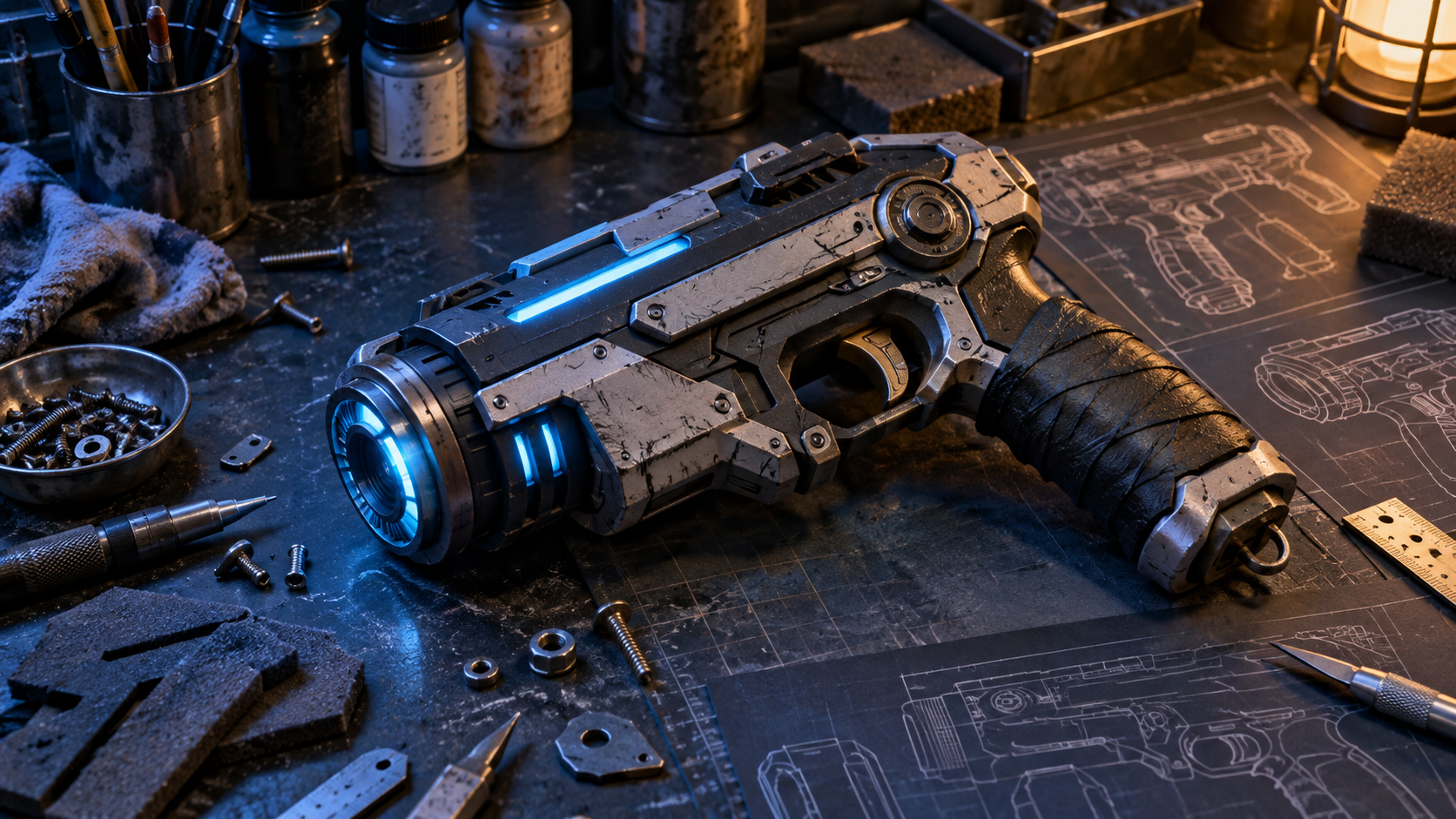
A successful game prop build starts with a version you can finish. Pick one object with a recognizable silhouette and decide whether it will be a display piece, a handheld prop, or part of a costume. That use case tells you how much weight, strength, comfort, and surface detail the project needs.
Build a small reference set before buying material. Gather a front view, side view, and a few detail images. Then make a short list of the visual anchors: the shape, main colors, one or two key controls, and any detail people will notice first. Those details deserve the most time.
Measure the intended display or wearer before making a full-size version. A cardboard, paper, or inexpensive foam mockup can show whether the shape feels right in the hand, sits comfortably on a shelf, or needs to be split into smaller parts. Testing scale early saves material and makes the final build easier to use.
Choose materials by the job each part must perform. Foam can create a light wearable shell. Wood, plastic, or a printed core can add structure. Elastic, webbing, magnets, or simple hardware can manage attachment points. One material rarely needs to do every task well.
Break the project into clear stages: shape, test fit, surface preparation, paint, and final assembly. Photograph or note what works at each stage. A small record of measurements, print settings, paint colors, and adhesives makes repairs and future builds much easier.
Treat the finish as a separate job. Smooth the seams that will be visible, prime the surface, add the largest color blocks first, and leave small details for last. Test new paint or glue on a scrap piece so the final prop does not become the experiment.
Before calling the prop complete, check how it sits, hangs, or is held. Test stands, straps, seams, and sharp edges. Then take a few finished photos. A game prop build does not need every tiny detail to be perfect; it needs a clear identity, a safe construction, and a finish you are happy to show.